Synapse Physiotherapy | Physio Center | Rehab Malaysia
Plantar fasciitis is one of the most common causes of heel pain. It can make the first steps in the morning painful, limit walking, affect exercise, and interfere with daily routines. For some people, the pain improves with rest, stretching, footwear changes, or simple self-care. For others, it becomes persistent and frustrating, especially when symptoms last for weeks or months.
Shockwave therapy has become a useful non-invasive treatment option for chronic plantar fasciitis, particularly when heel pain does not respond well to basic treatment. It uses acoustic pressure waves to stimulate healing in the affected tissue, reduce pain sensitivity, and support better foot function.
At Synapse Physiotherapy, treatment is personalised based on the patient’s pain level, foot mechanics, activity demands, and recovery goals. For plantar fasciitis, shockwave therapy is often combined with strengthening, stretching, footwear advice, and load management for better long-term results.
Plantar fasciitis affects the plantar fascia, a thick band of connective tissue running along the bottom of the foot. This tissue supports the arch and helps absorb impact when you stand, walk, or run. When the plantar fascia is repeatedly overloaded, it can become irritated, painful, and less able to tolerate daily stress.
Although the condition is commonly described as inflammation, chronic plantar fasciitis is often linked to tissue degeneration and poor healing rather than simple inflammation alone. This is why rest and painkillers may only provide temporary relief.
The Royal Orthopaedic Hospital’s shockwave therapy guide explains that shockwave treatment may be used for heel pain and aims to increase blood flow and stimulate healing in the affected area.
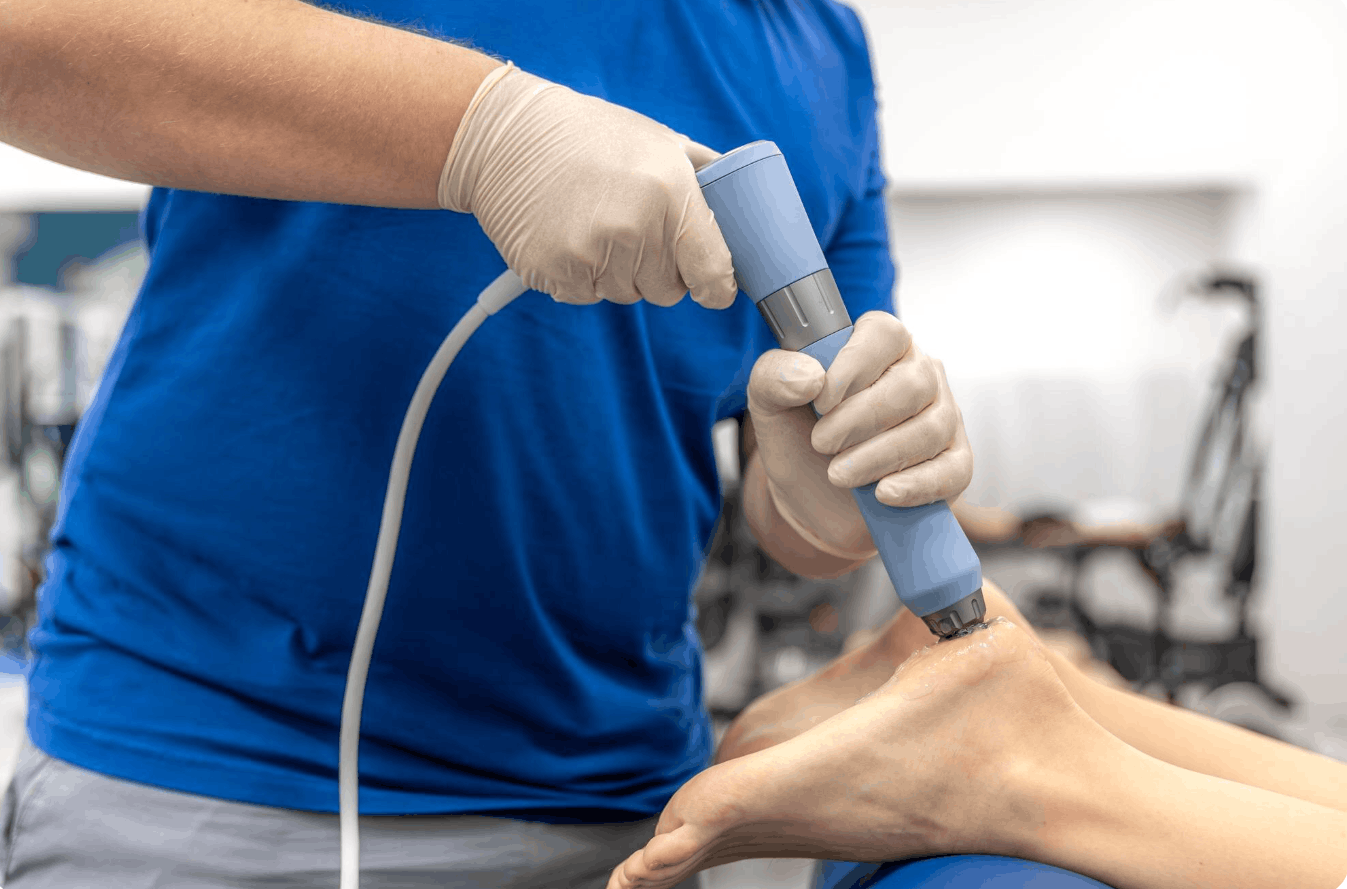
Shockwave therapy uses a handheld device to deliver acoustic waves into the painful area of the heel and plantar fascia. This creates controlled mechanical stimulation in the tissue, encouraging the body to restart a healing response in areas that may have become slow to recover.
How Shockwave Therapy May Support Plantar Fasciitis Recovery:
What to Expect from Results:
Because shockwave therapy targets the tissue’s healing response, improvements are usually gradual rather than immediate:
Shockwave therapy does not damage the foot. It works by stimulating the body’s own recovery process in tissues that have struggled to heal on their own.
Plantar fasciitis can become stubborn because the plantar fascia has limited blood supply compared with other tissues. Poor circulation can slow healing, especially when the foot is repeatedly loaded through walking, running, or standing.
Shockwave therapy helps by encouraging increased blood flow to the painful heel area. Better circulation may bring more oxygen and nutrients to the tissue, supporting repair and recovery. This is one reason it may be helpful for chronic cases that do not improve with rest alone.
The acoustic waves may also stimulate fibroblasts, which are cells involved in collagen production. Collagen is important for tissue structure and strength. By supporting collagen remodelling, the treatment may help improve the plantar fascia’s ability to tolerate load over time.
Chronic plantar fasciitis is not only a tissue problem. It can also involve increased pain sensitivity. When pain lasts for a long time, the local nerves may become more sensitive, making everyday movement feel uncomfortable.
Shockwave therapy may help reduce pain perception by affecting nerve endings in the painful area. This can make walking and exercise more tolerable, allowing patients to participate more effectively in rehabilitation.
Pain relief is important, but it should not be the only goal. If the foot remains weak, tight, or overloaded, symptoms may return. That is why treatment should be combined with a full physiotherapy plan.
A typical shockwave therapy session for plantar fasciitis is usually straightforward. The physiotherapist will first identify the most painful area around the heel or arch. A gel is applied to help transmit the acoustic waves, and the device is placed against the skin.
Patients often describe the sensation as tapping, pulsing, or pressure. It may feel mildly uncomfortable in tender areas, but it is generally tolerable. The intensity can usually be adjusted according to comfort.
A course may involve several sessions, often spaced about one week apart. The exact number of sessions depends on the severity of symptoms, how long the pain has been present, and how the patient responds to treatment.
Results from shockwave therapy are not always immediate because the treatment works by stimulating a biological healing response. Some patients notice pain reduction within one or two sessions. Others experience gradual improvement over four to eight weeks.
This delayed improvement is normal because tissue remodelling takes time. Patients should avoid judging the treatment too quickly after one session. Consistency with the full rehabilitation plan is often more important than relying on the device alone.
At Synapse Therapy’s shockwave services, treatment may include exercise therapy, movement assessment, strengthening, manual therapy, and patient education depending on individual needs.
For the best results, shockwave therapy should not be used as a standalone treatment. Plantar fasciitis often develops due to underlying factors such as:
A Complete Physiotherapy Plan May Include:
Examples of Condition-Specific Treatment Adjustments:
Patient Profile | Contributing Factor | Treatment Focus |
Long-hours standing worker | Excessive foot load | Activity pattern adjustment, supportive footwear |
Runner with heel pain | High running load | Running load modification, calf strengthening, gradual return-to-run progression |
Shockwave therapy stimulates tissue healing, but addressing the underlying cause of overload is what prevents plantar fasciitis from returning. Both elements are essential for lasting recovery.
Shockwave therapy may be suitable for patients with chronic heel pain lasting more than six weeks, plantar fasciitis that has not improved with basic care, pain that affects walking or exercise, or symptoms that return repeatedly despite stretching.
It may also help active individuals, runners, and people who stand for long hours at work. However, it may not be suitable for everyone. Patients with active infection, certain blood disorders, pregnancy, open wounds, or specific medical conditions may need a different approach.
A proper assessment is always needed before treatment. At Synapse Physiotherapy, the physiotherapist can assess whether your heel pain is truly plantar fasciitis or caused by another issue such as nerve irritation, fat pad pain, tendon problems, or stress injury.
Shockwave therapy is generally considered safe when performed by trained professionals. It is non-invasive, does not require injections, and usually involves minimal downtime. Some patients may experience temporary redness, soreness, tenderness, or mild swelling after treatment.
These effects usually settle within a short time. Your physiotherapist will advise whether you should modify activity after the session. In many cases, patients can continue normal daily tasks, although high-impact exercise may be reduced temporarily.
Shockwave therapy is a non-invasive treatment that uses acoustic pressure waves to stimulate healing, reduce pain sensitivity, and support tissue repair.
It may improve blood flow, stimulate collagen production, reduce chronic pain signals, and help remodel irritated plantar fascia tissue.
It may feel mildly uncomfortable, especially over tender areas, but most patients tolerate it well. The intensity can usually be adjusted.
Many patients need several sessions, often spaced around one week apart. The number depends on symptom duration, severity, and treatment response.
Some patients improve within a few sessions, while others notice gradual improvement over four to eight weeks as tissue healing continues.
Plantar fasciitis can be stubborn, especially when symptoms become chronic. Shockwave therapy offers a non-surgical option that helps stimulate healing, reduce heel pain, and support better movement. It works by encouraging blood flow, collagen remodelling, pain reduction, and tissue repair in the affected plantar fascia.
However, the best results usually come from combining treatment with a structured physiotherapy programme. Stretching, strengthening, footwear advice, gait assessment, and load management all play an important role in preventing symptoms from returning.
For personalised plantar fasciitis care, visit Synapse Physiotherapy’s shockwave therapy page or book an appointment today for a consultation.
Tags :







Joint degeneration and inflammation happens as the human body grows older, but that does not mean our way of life degenerates as well. Relief your joint pains with a joint effort together with your physiotherapist, who will provide pain-relief treatments and prescribe exercises for your wellbeing.

Common conditions in the older age population include hips & knee pain, back & neck pain, osteoarthritis, rheumatism, fear of falling and many more. Aging and degeneration of bodily function is inevitable, but here at Synapse, we will help you live the best of your life.