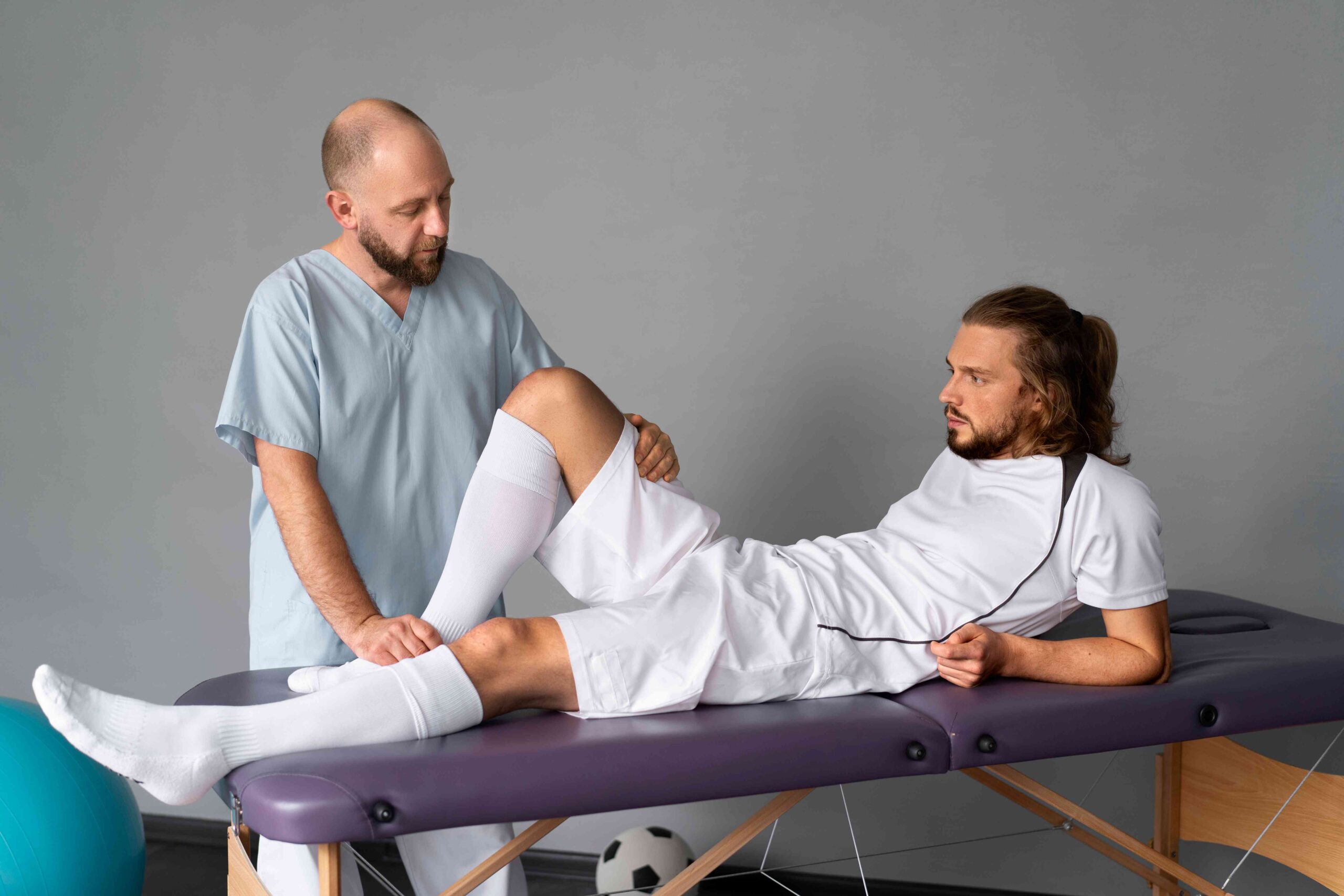
Athletic performance is not built through training alone. How well your body moves, recovers, and tolerates load plays just as big a role in how far you can push yourself. Sports Physiotherapy focuses on exactly these factors, helping athletes move more efficiently, train more consistently, and reduce the setbacks that come from preventable injuries.
Whether you are a competitive athlete, a weekend sports player, or someone building a fitness routine, Sports Physiotherapy can help you get more out of your training while lowering your risk of injury along the way.
What Is Sports Physiotherapy?
Sports Physiotherapy is a branch of physiotherapy focused specifically on the needs of athletes and physically active individuals. It combines injury prevention, performance-focused training, and rehabilitation into one approach, rather than treating symptoms in isolation.
A physiotherapist working in this area typically looks at:
- Movement quality and technique
- Muscle strength and imbalances
- Flexibility and joint mobility
- Training load and recovery
- Sport-specific demands
This broader view allows treatment to go beyond simply managing pain, addressing the underlying factors that influence how well an athlete performs.
How Sports Physiotherapy Improves Performance
1. Identifying Movement Inefficiencies
Small inefficiencies in movement can quietly limit performance over time. A runner with poor hip control, for example, may waste energy with every stride, while a swimmer with limited shoulder mobility may struggle to maintain an efficient stroke.
A Sports Physiotherapy assessment can identify these patterns early, allowing targeted correction before they become ingrained habits or contribute to injury.
2. Building a Stronger Foundation
Strength underpins almost every athletic movement, from sprinting and jumping to changing direction quickly. A physiotherapist can design a progressive strength conditioning programme tailored to an athlete’s sport, position, and current physical capacity, targeting the muscle groups most relevant to performance.
Common areas of focus include:
- Core stability
- Hip and glute strength
- Lower-limb power
- Upper-body strength for throwing or contact sports
3. Reducing Injury Risk
Injuries are one of the biggest disruptors to athletic progress. According to the National Strength and Conditioning Association, well-designed strength and conditioning programmes play an important role in improving athletic performance while helping reduce injury susceptibility.
Sports Physiotherapy can help identify risk factors, such as muscle imbalances or poor landing mechanics, and build a plan to address them before they lead to time away from sport.
4. Supporting Recovery Between Sessions
Performance is not only built during training. It is also shaped by how well the body recovers afterward. A physiotherapist can guide recovery strategies such as mobility work, soft-tissue techniques, and appropriate load management between sessions, helping athletes arrive at their next training block ready to perform.
5. Managing Training Load
Sudden increases in training volume or intensity are a common cause of overuse injuries. A physiotherapist can help monitor and structure training load, ensuring progression happens at a pace the body can adapt to safely, which is often covered under pain management when overuse symptoms are already present.
Sport-Specific Training
Different sports place different physical demands on the body. A footballer needs explosive acceleration and directional changes, a badminton player needs rapid lateral movement and overhead control, and a swimmer needs shoulder mobility and rotational core strength.
Sports Physiotherapy takes these demands into account, tailoring exercises to reflect the specific movements, positions, and intensities involved in an athlete’s sport. This makes training more relevant and helps bridge the gap between general fitness and sport-ready performance.
Who Can Benefit From Sports Physiotherapy?
Sports Physiotherapy is not only for elite athletes. It can benefit:
- Competitive athletes aiming to fine-tune performance
- Recreational players wanting to train more consistently
- Gym-goers looking to improve strength and movement quality
- Individuals returning to sport after a break or injury
- Anyone experiencing recurring niggles that affect training
Early involvement, before pain or injury becomes limiting, often allows for a more proactive and performance-focused approach.
What to Expect From an Assessment
A Sports Physiotherapy assessment typically starts with a discussion about your sport, training history, goals, and any current symptoms or previous injuries. This is followed by a physical assessment covering:
- Strength and flexibility
- Movement patterns and technique
- Balance and coordination
- Sport-specific movements where relevant
Based on these findings, a physiotherapist can build a plan combining strength work, mobility training, movement correction, and, where appropriate, sport-specific drills.
Frequently Asked Questions
No. While it plays an important role in injury treatment, it is equally valuable for performance improvement and injury prevention in uninjured athletes.
This depends on your goals and training demands, but periodic assessments can help catch developing issues before they affect performance.
Yes. Structured strength work, movement correction, and load management are central to training harder while managing injury risk.
No. Recreational athletes and fitness enthusiasts can benefit just as much from improved movement quality and strength.
This varies by individual and goal, but many athletes notice improvements in movement quality and training tolerance within a few weeks of consistent work.
Take Your Performance Further
Athletic performance depends on more than effort in training. Movement quality, strength, recovery, and load management all play a part in how far you can push your body safely and consistently. Sports Physiotherapy brings these elements together, helping you train smarter, recover better, and reduce the setbacks that come from preventable injuries.
Whether you are chasing a personal best, preparing for competition, or simply want to move and train with confidence, a tailored approach can make a meaningful difference. Book an appointment with Synapse to start building a stronger, more resilient foundation for your sport.
Tags :

Back & Neck Pain
- Spine & Core Rehabilitation
- Strength & Conditioning Programme
- Pain Management
- Biomechanical Assessment
- Sports Physiotherapy
- Group Class

Sports Injuries
- Strength & Conditioning Programme
- Pain Management
- Biomechanical Assessment
- Sports Physiotherapy
- Shockwave Therapy
- Group Class

Work Desk Injuries

Pre-Post-Surgical Conditions

Scoliosis & Postural Abnormalities

Neurological Conditions

Osteoarthritis & Rheumatism
Joint degeneration and inflammation happens as the human body grows older, but that does not mean our way of life degenerates as well. Relief your joint pains with a joint effort together with your physiotherapist, who will provide pain-relief treatments and prescribe exercises for your wellbeing.

Conditions Relating To Elderly
Common conditions in the older age population include hips & knee pain, back & neck pain, osteoarthritis, rheumatism, fear of falling and many more. Aging and degeneration of bodily function is inevitable, but here at Synapse, we will help you live the best of your life.