Synapse Physiotherapy | Physio Center | Rehab Malaysia

A rolled ankle, commonly known as an ankle sprain, is one of the most frequent injuries affecting athletes and active individuals. It can happen during running, jumping, playing sports, exercising, or even walking on an uneven surface. Although some ankle sprains are mild and recover with simple home care, others can cause significant swelling, pain, instability, and difficulty walking. Visiting a sports injury clinic helps ensure the injury is properly assessed and treated from the early stages of recovery.
A sports injury clinic can provide more than pain relief. Physiotherapists can assess the injury’s severity, restore ankle mobility, rebuild strength, improve balance, and develop a gradual return-to-sport programme. Early rehabilitation can also help reduce the risk of recurrent sprains, common when the ankle does not fully regain its strength and stability.
A rolled ankle usually occurs when the foot suddenly moves inward or outward beyond its normal range, overstretching or damaging the ligaments supporting the ankle joint. The most commonly affected area is the outer ankle, where the lateral ligaments can become stretched or torn.
Depending on severity, an ankle sprain may cause pain and swelling, bruising, difficulty walking, reduced ankle movement, tenderness around the injured ligaments, and a feeling of instability. Some people may continue walking despite the injury, while others struggle to put weight through the affected foot.
It can be tempting to simply rest after rolling your ankle and wait for symptoms to disappear. However, pain reduction does not necessarily mean the ankle has fully recovered.
A sports injury clinic can assess the ankle and determine its likely severity, whether further medical assessment is needed, which movements are currently safe, and when it is safe to return to sport. This individualised approach is particularly useful for athletes who need to return to running, jumping, cutting, or other high-demand movements, an area covered under Synapse’s sport physiotherapy services.
The first stage of treatment is a detailed assessment. A physiotherapist may ask how the injury happened, whether you felt a “pop” at the time, and about previous ankle sprains, since recurrent injuries can affect stability.
The physical assessment may include ankle range of motion and swelling, muscle strength and weight-bearing ability, balance and joint stability, and walking pattern. The physiotherapist may also assess the foot, knee, and hip, since movement problems elsewhere in the lower limb can influence how the ankle functions, one of the many conditions treated at Synapse.
During the early stage, treatment focuses on protecting the injured tissues while keeping the patient as mobile as safely possible. Management may include relative rest from aggravating activities, compression, elevation, pain-relieving strategies, and gentle ankle movement. The goal is not to keep the ankle completely still, since appropriate movement helps prevent excessive stiffness while allowing tissues to recover.
Ankle stiffness is common after a sprain and can affect walking, squatting, running, and jumping. A physiotherapist may prescribe gentle exercises such as ankle circles, ankle pumps, calf stretching, and knee-to-wall mobility work, adjusted to the patient’s symptoms and stage of recovery. Restoring mobility matters because a stiff ankle may cause the individual to compensate through other joints.
After an ankle sprain, the muscles surrounding the ankle may weaken, making the joint less capable of handling sudden movements. A rehabilitation programme may include progressive strengthening exercises such as resistance-band ankle work, calf and heel raises, and single-leg strengthening, following similar principles to Synapse’s strength conditioning programmes, becoming more challenging as strength improves.
Balance training is equally important, since an ankle sprain can affect proprioception, the body’s ability to sense joint position and movement, making it easier for the ankle to roll again. A physiotherapist may introduce single-leg standing, balance on unstable surfaces, single-leg squats, and dynamic balance drills to help the ankle and surrounding muscles respond more effectively to sudden changes in position.
Once basic strength and balance have improved, rehabilitation can progress toward functional movements such as squatting, lunging, step-ups, hopping, and landing, preparing the ankle for the demands of daily life and physical activity.
An athlete should not automatically return to sport simply because they can walk without pain. Different sports place different demands on the ankle. A football or basketball player may need sprinting, sudden stops, and rapid direction changes, while a runner may need a gradual return-to-running programme and a badminton player extra lateral movement and lunging work. A sports injury clinic can adapt rehabilitation to the athlete’s specific sport and position.
One of the biggest benefits of professional rehabilitation is reducing the risk of future ankle sprains. Previous injuries can leave behind reduced strength, poor balance, limited mobility, and hesitation during movement, all of which should be addressed before returning to full activity.
A long-term prevention plan may include regular calf and ankle strengthening, balance exercises, mobility work, and progressive sport-specific conditioning. According to the International Ankle Consortium, a global body of researchers and clinicians dedicated to ankle injuries, structured rehabilitation and prevention strategies help reduce the long-term burden of lateral ankle sprains and chronic instability.
Return to sport should be based on function, not simply days since injury. Before returning to full activity, a physiotherapist may assess pain levels, mobility, strength, single-leg balance, hopping ability, and landing mechanics. The athlete should ideally perform sport-specific activities confidently without significant pain or instability.
Although many ankle sprains can be managed conservatively, some injuries require further medical assessment. Seek medical attention if there is:
A physiotherapist can also identify situations where further investigation or referral may be appropriate.
Recovery time varies, but mild sprains may improve within a few weeks, while more significant injuries can take longer with structured rehabilitation.
Not necessarily. Gentle, appropriate movement often helps more than complete immobilisation, guided by a physiotherapist.
Yes. Ongoing weakness, instability, or stiffness from an old sprain can still be assessed and improved with targeted rehabilitation.
Not always. Imaging is usually only needed when certain signs, such as inability to bear weight or suspected fracture, are present.
Balance training, strengthening, and gradual sport-specific conditioning through a sports injury clinic can significantly reduce the risk of recurrence.
A rolled ankle may initially seem minor, but inadequate rehabilitation can leave the ankle weak, stiff, or unstable. A sports injury clinic can provide a structured approach to recovery, from the initial assessment and pain management through mobility exercises, strengthening, balance training, and sport-specific rehabilitation.
The goal is not simply to make the ankle feel better. Effective rehabilitation aims to restore its strength, movement, stability, and ability to tolerate the demands of everyday life or sport. Book an appointment with Synapse to get your rolled ankle properly assessed and start your recovery.
Tags :



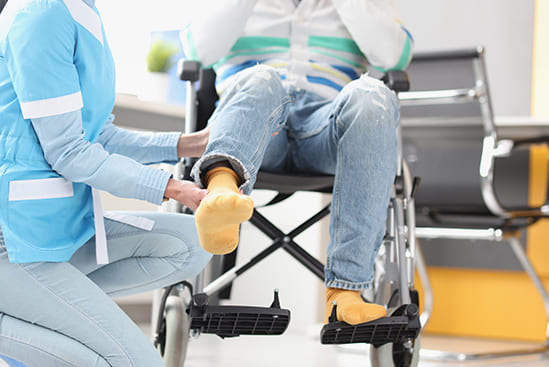



Joint degeneration and inflammation happens as the human body grows older, but that does not mean our way of life degenerates as well. Relief your joint pains with a joint effort together with your physiotherapist, who will provide pain-relief treatments and prescribe exercises for your wellbeing.

Common conditions in the older age population include hips & knee pain, back & neck pain, osteoarthritis, rheumatism, fear of falling and many more. Aging and degeneration of bodily function is inevitable, but here at Synapse, we will help you live the best of your life.